 Written by Carey Finn
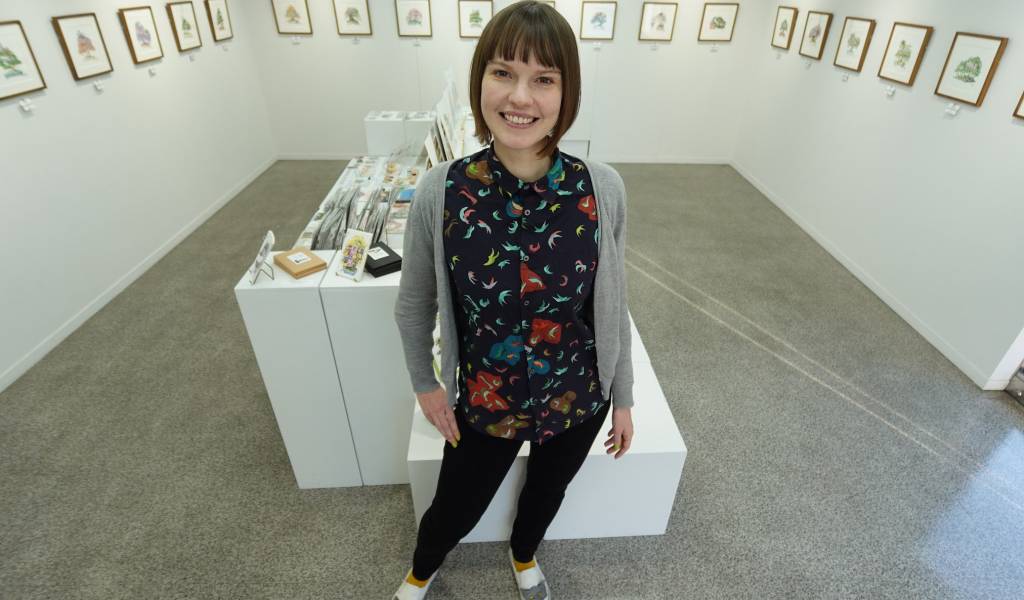
Erica Ward is a Californian artist who’s been living in Japan since 2010. In her time here, she has built a career as a successful artist and illustrator, whose eye-catching watercolor work invites us to find beauty in the mundane.
Ward’s art has been featured everywhere from galleries to tourism brochures about Japan, and we get excited whenever she tells us about a new show. She recently did an exhibition called nekomachi, which offered a cat’s perspective on the Tokyo cityscape.
We sat down with Ward to ask her about her career journey, and what advice she has for folks looking to work as creatives in Japan.
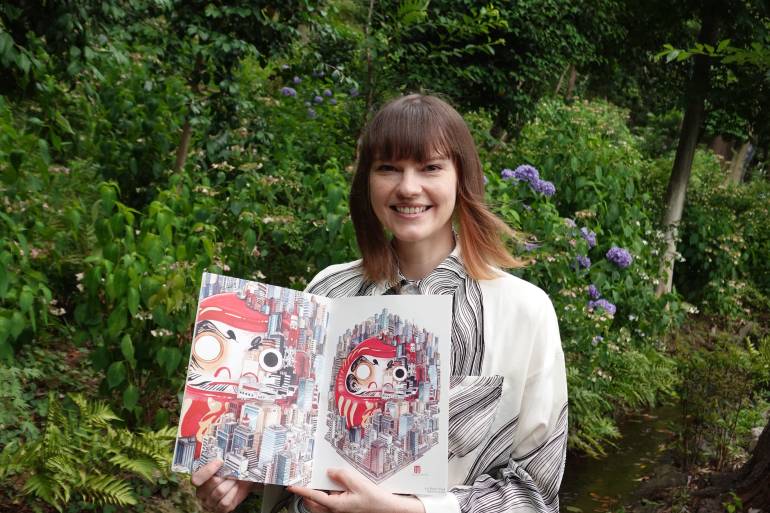
What brought you to Japan?
Erica Ward (EW): I actually studied Japanese in high school. It was a language elective that we had, and it was my favorite course. When I was signing up for universities, I naturally went into a Japanese major. In the back of my mind, I always knew I wanted to try living in Japan.
During university, I did a home stay for a year in Nagoya — and really liked it. I went back to the States (California) and taught Japanese for a year — I thought maybe I would go into education or translation.
I wanted to do something related to Japan, or Japanese. Anyway, education wasn’t the best match! But I taught English for a while — I hadn’t thought of making art a career, at that point. It was just something that I loved to do.
How did you get into art here?
EW: I was doing other jobs, and met someone who ran an art gallery, an art space, and they found out that I did art as a hobby, and invited me to show some work there. I had never done any kind of exhibition before. It was really fulfilling. It sparked the concept that maybe I could make art something I do for a career.
That was in 2013 in Iwate — I was living in Tōhoku. The art space was in a converted school that no longer had enough students to run, so they had turned it into kind of a community museum. It was just serendipity that I met the person who was running that.
It was a nice start — in some of the rural regions I think art galleries aren’t as popular, so people were really excited to come as well — it was something fresh to see that space.
Were there cats in those days?
EW: There weren’t cats in that art! I was inspired by music a lot, so it was a little bit more rock and roll. I’ve always used a lot of Japanese motifs, and I think for that show I used a lot of kimono and Japanese imagery.
How did the cats come into the picture?
EW: (laughs) I love cats. With my latest series on cats (nekomachi) — a cat gallery invited me to do some pieces for them, and I liked it so much I expanded the series.
Note: Erica grew up with cats, and has a cat of her own (or is owned by a cat? We can’t tell). She also volunteered at a cat shelter for eight years.
Where do you draw inspiration from?
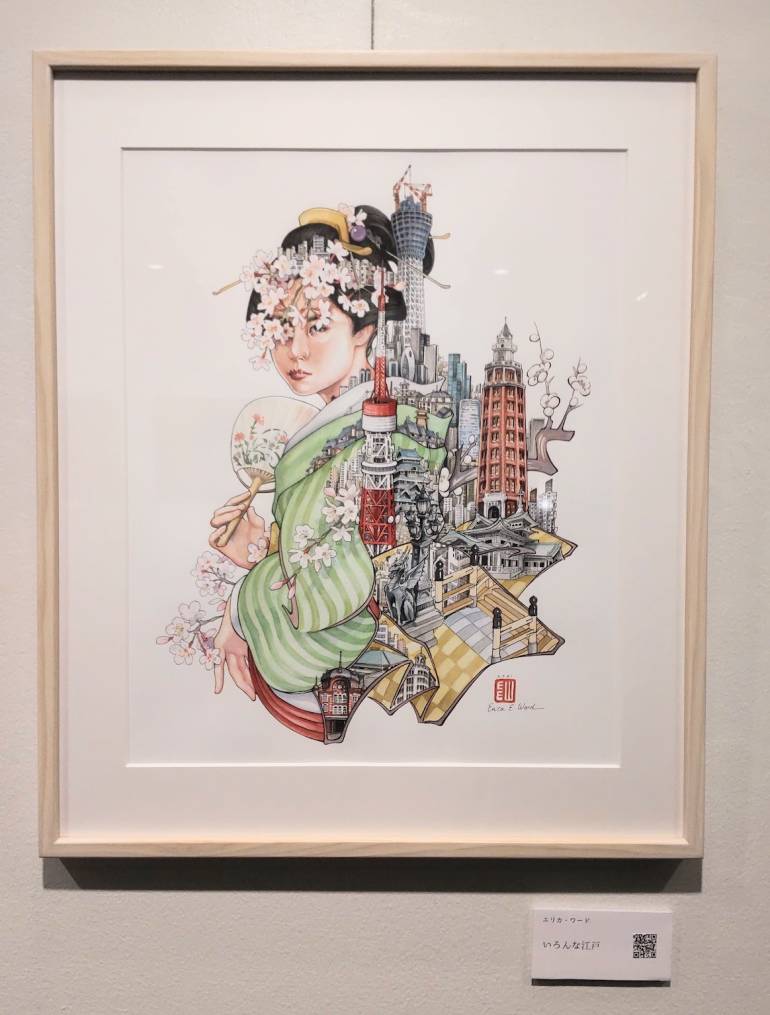
EW: When I started focusing on art seriously I did a lot of portraits — a lot of human figures in the artwork, a lot of personifications of different concepts. And then when I moved to Tokyo at the beginning of 2016, I started seeing buildings everywhere.
You know, everywhere you look, there’s no green, there’s no mountains. Even before you see the people, you see the landscape that’s just covered with buildings, plastered with buildings. That just filled my mind, and I had to start drawing it.
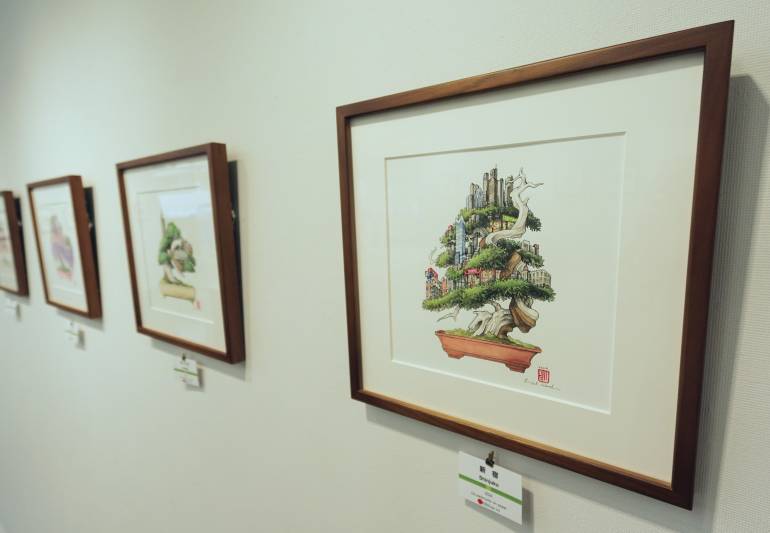
I had never enjoyed drawing architecture before. Buildings were not something that I would consider a favorite subject. But moving to Tokyo, I couldn’t avoid it and my feelings began to change. So for the last almost ten years now, I’ve been drawing architecture and the brocade of Tokyo buildings.
Did you have to do any upskilling?
EW: Yeah, I had to get the ruler out! I wasn’t working with a lot of straight lines before. It was more organic shapes and plants and people. I work totally analog, on paper, so I embrace the wiggly lines — it doesn’t have to be perfectly straight, but I had to be a little more precise than I had been before.
Tell us about your move to Tokyo?
EW: I didn’t have a job set up at that point, and so I thought — let’s try art. It was pretty bumpy, the first year or so. But Tokyo has so many opportunities, if you really seek them out — and I think I just had a lot of lucky timing, and lucky meetings. It’s been about nine years now.
For some of the early years, I did a bit of translation freelance, and some online writing, a few English lessons here and there — but now I’m doing art full time. And that’s personal art with gallery shows, as well as illustration for clients.
What advice would you give to aspiring artists overseas, hoping to make it work in Japan?
EW: I think the first step would be considering what you want to do — if it’s illustration for clients, or selling your own work at art markets, give it a little bit of thought.
You don’t have to overthink it, but once you have that general idea, especially in Tokyo and some of the larger cities, there are a lot of events. Start by going as a visitor — I don’t want to use the word networking, but go and meet the people who you want to be.
Go to the events that you want to participate in as an artist. And then the next step would be signing up for the next iteration of the event, or asking the organiser if you could showcase next time — putting yourself out there. Saying you do art, letting people know that.
Tokyo will make a lot of the connections for you, if you do that first part of the work. And I recommend doing a show more than once — the first time, it’s really hard to do well, and is better to treat it as an experiment. See how people react, and then try again.
For people thinking they want to get some commissions from brands, how would they make this happen?
EW: I think there are a lot of different avenues, and it comes back to that first part — if you have a clear goal of what you would like to be doing for work, that helps a lot.
In my case, a lot of client work that I have done has been organic through social media — I would recommend having a website, and posting the type of work that you want to do, to your social media. Online presence is not always fun, but it’s important.
Also, at art markets — sometimes people come to scout for art that matches what they are looking for (as a brand). The more markets you do, the more business cards you pass out, the more that will come back to you.
I also will say, it might not be in someone’s best interest to accept every single project. At the start, you know, when you get a project, you’re really excited and happy that someone approached you.
When you’re starting it may be better to take more, but it’s important to stick to your initial vision of what you want to do. You can go down a path that’s different from what you thought of, without noticing sometimes. Just because you can do it, doesn’t mean you should.
What about Japanese language skills?
EW: I think since a lot of illustration work is online, and in the metropolitan areas there are large English-speaking communities, I suppose it’s not necessary … but I think even the smallest amount of Japanese is going to really help.
The more you have, the more opportunities there are. It’s as simple as that. Even if you don’t fully know Japanese, if you can memorize a few sentences that explain what you’re doing, I think that goes a long way.
Is there still room to be an artist, with all the AI tools out there today?
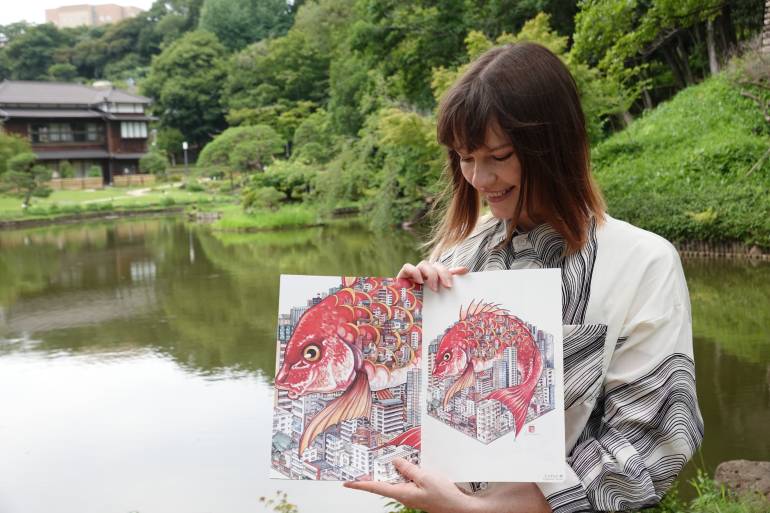
EW: I imagine that there are just going to be more images in the world. I don’t think that it’s going to completely push out human artists. If it’s here to stay, I think we need to try and accept that there’s room for all of us.
Are there any online resources you recommend for finding out about art events?
EW: Each event has a different registration, and I don’t know that there is a consolidated site, as such. I think the best thing to do is a search, or if you are in Tokyo, just to ask around to find out what the different events are, and maybe pick a few to go to. Design Festa is a big one that is a lot of fun.
I remember in the early days searching things like muryou de tsukaeru gyarari (galleries you can use for free) — and that too, for the Japanese-language question. If you can do a few searches in Japanese, that opens lots more doors.
If you want to go a little more in the fine-art direction, try searching for group shows, or group exhibitions. There are a lot of galleries in Tokyo that are constantly doing group shows, and almost anyone can apply. Sometimes they’re judged, sometimes you can just enter. It’s a foot in the door, and it’s low pressure.
Which city is best for people starting out?
EW: I’ve lived in Tōhoku and Osaka, and when I moved to Tokyo it was totally different. I wish I didn’t have to say that, because living in other parts of Japan is so amazing, and there is a different vibe in each city — but as far as art opportunities go, being in Tokyo is the easiest way to get the magic of random meetings. You can go to events every single day if you want to. For starting out, I would recommend Tokyo.
What have some of your favorite projects been, over the years?
EW: I did the cover of the English-language edition of the Tokyo Metropolitan Government’s brochure that they provide to tourism boards in different countries. I’m really inspired by the city of Tokyo and I draw a lot of cityscapes. That was really fun.
I also did two bookcovers for the Japanese author Manabu Makime. He met me at one of the art events, it was a chance meeting. And I worked on a board game called Let’s Go To Japan! for a US-based company. They reached out via my social media.
I did a mural outside Shibuya Station when they were doing construction, that was really exciting and a new experience for me.
Interviews with other local creatives
Some quotes have been edited down for clarity and brevity.